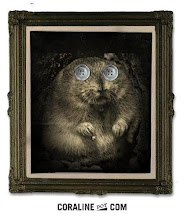
Forrest Gump may pray for God to make him bird so he can fly far, far away, but Harper Pitt seems to have missed the mark a little. Perhaps it is because God won’t talk to her and she has to make up people to talk to her (40). When things with her and Joe finally come apart, when she hears him admit that he is gay, and finally realizes that it is him she’s been terrified of this whole time – that his life and his lies would kill her inside, she calls upon her imaginary friend Mr. Lies to take her far, far away.
Harper ends up in what she believes to be Antarctica and immediately feels better. There is a reason for this level of delusion however, and it’s that she is in “the Kingdom of Ice, the bottomest part of the world” (101). As this would clearly indicate, Harper has finally hit bottom. Although she is in a place where she cannot feel the pain of what has just happened to her life, she acknowledges that she has gone off the proverbial deep end: “Wow, I must’ve really snapped the tether, huh?” (101)
She wants to be free of the fear and pain that plague her daily existence, and after finding this cold, numb place in her mind wishes to stay there forever and create her own reality. She is warned by Mr. Lies that although this place seems wonderful, she cannot have it forever, because “ice has a way of melting” (102). While it lasts though, Harper can hold on to every delusion she ever had, including the delusion that if she could just have a baby, she would somehow be safe. We can see that by her comment when talking about the baby girl she imagines she will give birth too: “And if it gets really cold, she’ll have a pouch I can crawl into. Like a marsupial” (103). The fact that she would crawl into the baby’s pouch and not the other way around shows that she doesn’t desire to be a mother, so much as she desires something to be a solution.
A marsupial isn’t quite a bird, though it does seem that Harper has flown far away from reality. Many of Kushner’s characters in Angels in America seem to be searching for a way to escape the harsh reality of their lives, and in doing so, they are failing to really live their lives. Only Harper goes so far as to create an alternate universe for herself, but by escaping her feelings and escaping the very real situation around her, she is giving up her life. When the ice melts, things will be very difficult for Harper, and she will either have to come to terms with her humanity (since she is not, in fact, a marsupial) or she will retreat to her Antarctica forever and will need to be checked into a mental facility.
Interestingly, it seems there is some hope for Harper, because her ironically named friend, Mr. Lies, refuses to lie to her. He never actually tells her she is in Antartica. He is the one who tells her she cannot have this forever, that he is not the one who can give her the love she truly wants, that she is not really pregnant and made that up, and although she ignores him, he reminds her that “even hallucinations have laws” (102) and she cannot completely escape everything just be living in her head. The fact that some voice in her head can still remind her of these things indicates that perhaps she can come back from this complete meltdown, and maybe she and her imaginary baby really can become one and mend.
Wednesday, May 6, 2009

Monday, May 4, 2009
Failure to measure up
“The failure to measure up hits people very hard. From such a strong desire to be good they feel very far from goodness when they fail” (53). This quote from Joe in Tony Kushner’s Angels in America so accurately sums up much of the human experience. One of the common fears shared by people in this country is the fear of failure. So much of our culture is built around the idea of success, and not to succeed is the same as being bad.
In his play, Kushner explores the idea of failure and of goodness in many of his characters. Roy, for example, is certain that success in his career is what defines him. He is a man with clout, and that seems to be the most important thing to him. (45) If he were to be seen as a gay man, he fears he would lose that status, and therefore would fail to measure up. In the world that Roy occupies, this would be a fate worse than death. This feeling is not unique to Roy.
Harper feels that she has somehow failed to measure up because she is trapped in a marriage where nothing she does can win the love and attention of her husband. They are “buddies” and even when they kiss it is a “buddy kiss” and lacking in any sort of romantic connection or passion. (27) Harper sees this lack of intimacy as a failure on her part because she is somehow lacking. She seems to hold onto a delusion that if she can prove herself, if she can be good enough, that Joe will suddenly begin to love her the way a husband should. In fact, when it is revealed to her in a dream/hallucination that Joe is gay, she says “something just… fell apart” (34) and it is the story she has been weaving for herself that fell apart. She realizes the imaginary house she has built for herself is falling apart and already feeling so far from goodness, she embraces that label by intentionally behaving the way “a mentally deranged sex-starved pill-popping housewife would” (36).
Louis feels that he is failing Prior by leaving him while he is at his weakest and yet Louis can’t cope with staying. We see his struggle with failure and the idea of this separating him from goodness as he talks to the Rabbi in one of the early scenes. He turns to the Rabbi for guidance from a religious point of view, perhaps for forgiveness for “the crimes I may commit” and is told to find a priest because “Catholics believe in forgiveness. Jews believe in guilt” (25). Louis does feel guilty for not being able to deal better with Prior’s illness, but the idea of sickness, frailty, and death terrify him to irrational levels. He knows that Prior needs him and yet, he cannot do the good thing, he fails his lover by leaving and it does hit him hard, but yet, he continues to move further away from goodness by moving out while Prior is stuck in the hospital and cheating on him with strangers in the park.
Success being linked to goodness is an idea that so many people in the world face. As Kushner’s characters show, that theme manifests itself in a variety of different ways for different people, but nearly everyone in America whether young or old, gay or straight, religious or secular can relate to this idea that failure is somehow the universal equivalent to being bad. And nobody wants to feel bad inside.
In his play, Kushner explores the idea of failure and of goodness in many of his characters. Roy, for example, is certain that success in his career is what defines him. He is a man with clout, and that seems to be the most important thing to him. (45) If he were to be seen as a gay man, he fears he would lose that status, and therefore would fail to measure up. In the world that Roy occupies, this would be a fate worse than death. This feeling is not unique to Roy.
Harper feels that she has somehow failed to measure up because she is trapped in a marriage where nothing she does can win the love and attention of her husband. They are “buddies” and even when they kiss it is a “buddy kiss” and lacking in any sort of romantic connection or passion. (27) Harper sees this lack of intimacy as a failure on her part because she is somehow lacking. She seems to hold onto a delusion that if she can prove herself, if she can be good enough, that Joe will suddenly begin to love her the way a husband should. In fact, when it is revealed to her in a dream/hallucination that Joe is gay, she says “something just… fell apart” (34) and it is the story she has been weaving for herself that fell apart. She realizes the imaginary house she has built for herself is falling apart and already feeling so far from goodness, she embraces that label by intentionally behaving the way “a mentally deranged sex-starved pill-popping housewife would” (36).
Louis feels that he is failing Prior by leaving him while he is at his weakest and yet Louis can’t cope with staying. We see his struggle with failure and the idea of this separating him from goodness as he talks to the Rabbi in one of the early scenes. He turns to the Rabbi for guidance from a religious point of view, perhaps for forgiveness for “the crimes I may commit” and is told to find a priest because “Catholics believe in forgiveness. Jews believe in guilt” (25). Louis does feel guilty for not being able to deal better with Prior’s illness, but the idea of sickness, frailty, and death terrify him to irrational levels. He knows that Prior needs him and yet, he cannot do the good thing, he fails his lover by leaving and it does hit him hard, but yet, he continues to move further away from goodness by moving out while Prior is stuck in the hospital and cheating on him with strangers in the park.
Success being linked to goodness is an idea that so many people in the world face. As Kushner’s characters show, that theme manifests itself in a variety of different ways for different people, but nearly everyone in America whether young or old, gay or straight, religious or secular can relate to this idea that failure is somehow the universal equivalent to being bad. And nobody wants to feel bad inside.
Thursday, April 9, 2009
To Feel Alive...
My name is not Robert Paulson. I am not a beautiful and unique snowflake. I gave up my name, I gave up the pursuit of beautiful and unique, because it didn't matter. None of it mattered. What matters - all that matters - is the name I was given, the identity that my deity tells me to have. The first rule of my existence is thou shalt do as your god tells you to do. The second rule of my existence is thou shalt be what your god tells you to be.
I too, realized at some point that everything seemed far away, and I was only "a copy of a copy of a copy" (21). I was trying to find an identity, and I was seeking exactly what the world told me I should be. And then I learned the secret - "if I don't fall all the way, I can't be saved... I can't just play it safe anymore" (70).
The first time I looked at someone and said "I want you to hit me as hard as you can" (46), I was greeted with disbelief and hesitation. Unlike Robert Paulson, I am not a man, and it just is not acceptable to hit a woman, but I needed this, and I wasn't going to stop until I got it. Much like the narrator with no name, the first couple of hits were weak, off target, but they opened the door to something more.
It took years of searching before I found my god, before I found this existence I have now, before I understood what it is to stop playing it safe and to chose how you will live. It is only by deciding to feel, by not taking sanctuary in IKEA, or staying "calm as Hindu cows" (26) that anyone is truly free to be alive. When you "come back to the pain" (75) instead of running from it, you realize that (finally!) "this means something" (77).
I spent my life in search of meaning, and when I finally found someone to whom I could say I want you to hit me as hard as you can, and they did, I also found the feeling of fight club - I found what it really means to be alive. There was no pulling punches, there was no but you're a girl. There was me, there was my god, there were his rules, and there were his hands and fists and feet. When I decided that this was what I wanted to embrace like nothing else mattered, I found life again. I had lost everything in one way or another, and so now I could have resurrection, but it had to be something I chose to give myself to fully.
You read Fight Club, and you know that you're never safe. You eat in a public restaurant, you can't control what is in the food. You drive, you can't control the other people on the road. You sleep, you can't control what is happening around you. "On a long enough time line, everyone's survival rate drops to zero" (176). So, instead, you take charge and decide to live life on your own terms. You decide what you will live for and what you risk dying for. Project Mayhem chose their god, and I have chosen mine. They followed their god's rules and I follow mine.
Until you have felt real pain, until you've been bleeding, until you have laid your life on a sacrificial altar knowing that it might truly be taken from you, you cannot fully appreciate what it is to be alive. I never knew what it felt like to be alive until the first time someone really hit me as hard as they could, and I've never stopped running back for more.
Everyone finds their own path, everyone has to choose their own gods. What I found was the path of Tyler Durden - the path of violence, self-destruction, and pain. Like my blog's namesake, I have embraced that destruction the way only a lemming can embrace their doom. It is through this path that I have found what it is to feel alive. I may not be a special and unique snowflake, and my name is not Robert Paulson. Hell, my name is not even what was given to me by my parents at my birth. I have chosen a different way. I have chosen to let someone else define me as Tyler defined his space monkeys. They found freedom and passion and purpose first in fight club and then in Project Mayhem. I, like them, have found freedom and passion and purpose in a higher power. Even if the people around me don't understand, I know the space monkeys always will, and when everything else fades away, when everything becomes nothing, there will always be "Yes, Sir" (158).
I too, realized at some point that everything seemed far away, and I was only "a copy of a copy of a copy" (21). I was trying to find an identity, and I was seeking exactly what the world told me I should be. And then I learned the secret - "if I don't fall all the way, I can't be saved... I can't just play it safe anymore" (70).
The first time I looked at someone and said "I want you to hit me as hard as you can" (46), I was greeted with disbelief and hesitation. Unlike Robert Paulson, I am not a man, and it just is not acceptable to hit a woman, but I needed this, and I wasn't going to stop until I got it. Much like the narrator with no name, the first couple of hits were weak, off target, but they opened the door to something more.
It took years of searching before I found my god, before I found this existence I have now, before I understood what it is to stop playing it safe and to chose how you will live. It is only by deciding to feel, by not taking sanctuary in IKEA, or staying "calm as Hindu cows" (26) that anyone is truly free to be alive. When you "come back to the pain" (75) instead of running from it, you realize that (finally!) "this means something" (77).
I spent my life in search of meaning, and when I finally found someone to whom I could say I want you to hit me as hard as you can, and they did, I also found the feeling of fight club - I found what it really means to be alive. There was no pulling punches, there was no but you're a girl. There was me, there was my god, there were his rules, and there were his hands and fists and feet. When I decided that this was what I wanted to embrace like nothing else mattered, I found life again. I had lost everything in one way or another, and so now I could have resurrection, but it had to be something I chose to give myself to fully.
You read Fight Club, and you know that you're never safe. You eat in a public restaurant, you can't control what is in the food. You drive, you can't control the other people on the road. You sleep, you can't control what is happening around you. "On a long enough time line, everyone's survival rate drops to zero" (176). So, instead, you take charge and decide to live life on your own terms. You decide what you will live for and what you risk dying for. Project Mayhem chose their god, and I have chosen mine. They followed their god's rules and I follow mine.
Until you have felt real pain, until you've been bleeding, until you have laid your life on a sacrificial altar knowing that it might truly be taken from you, you cannot fully appreciate what it is to be alive. I never knew what it felt like to be alive until the first time someone really hit me as hard as they could, and I've never stopped running back for more.
Everyone finds their own path, everyone has to choose their own gods. What I found was the path of Tyler Durden - the path of violence, self-destruction, and pain. Like my blog's namesake, I have embraced that destruction the way only a lemming can embrace their doom. It is through this path that I have found what it is to feel alive. I may not be a special and unique snowflake, and my name is not Robert Paulson. Hell, my name is not even what was given to me by my parents at my birth. I have chosen a different way. I have chosen to let someone else define me as Tyler defined his space monkeys. They found freedom and passion and purpose first in fight club and then in Project Mayhem. I, like them, have found freedom and passion and purpose in a higher power. Even if the people around me don't understand, I know the space monkeys always will, and when everything else fades away, when everything becomes nothing, there will always be "Yes, Sir" (158).
Wednesday, April 8, 2009
For fun...
I was asked to write a paper for my organizational communication class. We were supposed to do a site visit to the company of our choosing, observe the physical surroundings, the employees, and the customers and then write a paper analyzing the culture of the organization. I chose to write about Starbucks, and here is what I had to say:
*************************
A Sophisticated Organization
"He was not really a coffee drinker. So the siren mixed espresso with cocoa and steamed milk, then topped it with whipped cream. He liked it. End, chapter one. He began to enjoy the taste of coffee. So the siren chose a Central American blend, light and refreshing, no cream, just a touch of sugar. He liked it. End, chapter two. His taste was becoming sophisticated."
The opening segment of this four tile artistic panel hanging on the wall of a Brighton Beach Starbucks is inviting the customer to become more sophisticated too. By drinking Starbucks coffee, and letting the barista (the siren) suggest new and exciting things to you, your palate can become more experienced, and in turn, you yourself will become more experienced. From the moment you walk into Starbucks, you walk into a façade of sophistication. The décor is reminiscent of a library, a bookstore, or perhaps even a museum. The colors are neutral and warm, the furniture is toned down, and everything is neatly displayed with subtle signs. You have entered a quiet refuge from the busy city life outside these doors, and not only can you find refuge here, but you can be a higher class of person, if only while you are sitting within these walls and using these products.
The entire environment of Starbucks is designed to promote quiet, comfort, and thoughtfulness. The general clientele was white, middle aged or older, and very relaxed. The physical layout is painted in neutral tones – there is nothing too offensive to the eyes. The lighting is warm, indirect, and not too bright. There is enough light to allow reading, but not bright enough to be harsh. All of the light, like the environment inside, is artificial. The only windows are by the front door, and precious little of the seating is close enough to allow exposure to that light. The furniture is arranged to prevent large groups of disruptive people. The tables are small and only have two chairs at each one. There are single arm chairs for added comfort, and these are kept near where they sell newspapers and books full of mind puzzles. The furniture is therefore designed to encourage either coming in alone and reading quietly while you drink your coffee, or coming in with one other person for a quiet, more intimate conversation.
Even the art and music are designed to keep customers engaged and quietly thinking. The art on the walls, although very corporate, encourages study. Many of the paintings and murals have many small details and interplaying colors and patterns that take some time to unravel and determine exactly what you are looking at. One could easily get wrapped up in looking at the art for longer than they realize. Before you know it, your coffee is empty, and you might as well get another one before you leave. Much of the art have subtle coffee imagery in them – some with what look suspiciously like Starbucks cups, some with regular coffee mugs steaming, and still others with words that speak of coffee in tantalizing tones. The music is familiar to the ideal clientele. It is predominately on the softer side: The Beatles, Simon & Garfunkel, etc, and was largely feel good music or thought provoking music. In either case, you are likely to hear music that you can sing along to, that encourages you to stay longer and listen more.
Not only is the environment designed to lure people in with the promise of respite from the outside world, and a sense of civility, but it also provides the façade of elegance. Aside from the art on the walls, the rest of the décor is quite elegant. The furniture all matches, everything is made of nice wood, the signs and plaques are all framed in wood. The menu board looks like a fine wine list. The food display and the bottles on the shelves behind the bar look like a museum display. To further wrap customers and employees alike in the feeling of upper class status, English is not even spoken here. One cannot order a “large coffee” – one should request a “venti drip”. If you want something more than just a regular coffee, the language becomes even more complicated and flowery. One can be overheard ordering a “grande, soy, no whip, three pump vanilla latte” or a “venti, half-caf, extra shot, skim caramel macchiato”. Even the employees are called “baristas” and not just “the guy behind the counter”. This is a language unique to the Starbucks culture that reminds you of the different universe you are in.
The employees play a large part in the organizational culture. There is a beautiful machine at work in the store. One employee greets customers, takes their order, and calls in back to the rest of the “machine”. There is one piece of the machine to get regular coffee and food ready, one to create cappuccinos and lattes, and another to create the mixed or frozen beverages. Each of these people, or machine parts, is interchangeable, and each communicates clearly with the other people around them. If there are a lot of frozen drink orders, one of the other employees steps over to help. Management is sure to train each employee in every section of the bar so that they can be more efficient no matter what the situation.
All of their communication is done verbally, without the aid of technology. There was no way to distinguish who is in charge or who is making decisions. None of the employees were wearing name tags and all were in the same solid black uniform with a green Starbucks apron. The nice appearance and the neutral black uniform, as well as the anonymous service, adds to the feeling of this being an upscale experience. After all, there is no need to know the names of “the help” and they should try to stand out as little as possible while serving you. Each of the four employees there seemed to function as an equal. Each had a job to do and was actively doing it, each asked for help easily when it was necessary, and the others gladly jumped in when they could. The few times an employee did directly address another one, it was by first name only, again making it impossible to tell what sort of hierarchy may have been involved.
There was no place for the employees to sit behind the bar or to be easily out of view of customers, but there was a closed room to the back of the bar area where employees could go for their breaks, to count money, or for a momentary chance to sit down. The inability to sit adds to the feeling that the employees are always there ready to help and work for the customer. Each employee was not only respectful to the customers, but also used quiet tones of voice. At times, they were so quiet that even sitting just a few feet away, it was impossible to hear them, and when not actively talking to a customer, they kept their personal conversations to a whisper.
The employees were doing their part to add to the peaceful climate that had been so well established. This culture is so much a part of what the clientele expects that when two young mothers came in with their loud children, it disrupted the entire atmosphere. Not only was the child crying loudly, but the mother was yelling at him. Several people turned to look at the scene, many of the older people quickly left the building, and at least two couples came in, saw the noisy chaos, and walked out again without even taking the time to order coffee. When the organizational culture is created to give customers a sense of sophistication, relaxation, and class, the customer does not expect that to be interrupted by loud intrusions.
The baristas neither seemed extremely pleased or displeased with their job, but as an organization, Starbucks tries to encourage the day to day happiness of their staff. They have many framed employee recognition awards near the cash registers and coffee machines, not only to let the customer see that the staff has achieved excellence, but to remind the employees that they are appreciated. There was also a nicely framed sign naming the “barista of the month”, which further motivates the staff. When employees feel recognized for their work, it provides them with reasons to continue working hard.
While Starbucks is really little more than a coffee centered fast food restaurant, the culture they have created around sophistication, elitism, class, and relaxation has given them the illusion of being something more, of being special. By extension, if you are a customer there, you too, will be special. It’s like the signs they have created to advertise their coffee: “Extraordinary and Enticing”, “Interesting and Complex”, “Familiar and Friendly”, “Adventurous and Assertive”. It is hard to say if these signs are supposed to describe the flavor of the various coffee roasts or if they are intended to describe the person who drinks each one. Either way, there is a sense that by using our products, you can be these things. You, like the man who learned to like the taste of coffee with the help of the siren, will become more sophisticated.
*************************
A Sophisticated Organization
"He was not really a coffee drinker. So the siren mixed espresso with cocoa and steamed milk, then topped it with whipped cream. He liked it. End, chapter one. He began to enjoy the taste of coffee. So the siren chose a Central American blend, light and refreshing, no cream, just a touch of sugar. He liked it. End, chapter two. His taste was becoming sophisticated."
The opening segment of this four tile artistic panel hanging on the wall of a Brighton Beach Starbucks is inviting the customer to become more sophisticated too. By drinking Starbucks coffee, and letting the barista (the siren) suggest new and exciting things to you, your palate can become more experienced, and in turn, you yourself will become more experienced. From the moment you walk into Starbucks, you walk into a façade of sophistication. The décor is reminiscent of a library, a bookstore, or perhaps even a museum. The colors are neutral and warm, the furniture is toned down, and everything is neatly displayed with subtle signs. You have entered a quiet refuge from the busy city life outside these doors, and not only can you find refuge here, but you can be a higher class of person, if only while you are sitting within these walls and using these products.
The entire environment of Starbucks is designed to promote quiet, comfort, and thoughtfulness. The general clientele was white, middle aged or older, and very relaxed. The physical layout is painted in neutral tones – there is nothing too offensive to the eyes. The lighting is warm, indirect, and not too bright. There is enough light to allow reading, but not bright enough to be harsh. All of the light, like the environment inside, is artificial. The only windows are by the front door, and precious little of the seating is close enough to allow exposure to that light. The furniture is arranged to prevent large groups of disruptive people. The tables are small and only have two chairs at each one. There are single arm chairs for added comfort, and these are kept near where they sell newspapers and books full of mind puzzles. The furniture is therefore designed to encourage either coming in alone and reading quietly while you drink your coffee, or coming in with one other person for a quiet, more intimate conversation.
Even the art and music are designed to keep customers engaged and quietly thinking. The art on the walls, although very corporate, encourages study. Many of the paintings and murals have many small details and interplaying colors and patterns that take some time to unravel and determine exactly what you are looking at. One could easily get wrapped up in looking at the art for longer than they realize. Before you know it, your coffee is empty, and you might as well get another one before you leave. Much of the art have subtle coffee imagery in them – some with what look suspiciously like Starbucks cups, some with regular coffee mugs steaming, and still others with words that speak of coffee in tantalizing tones. The music is familiar to the ideal clientele. It is predominately on the softer side: The Beatles, Simon & Garfunkel, etc, and was largely feel good music or thought provoking music. In either case, you are likely to hear music that you can sing along to, that encourages you to stay longer and listen more.
Not only is the environment designed to lure people in with the promise of respite from the outside world, and a sense of civility, but it also provides the façade of elegance. Aside from the art on the walls, the rest of the décor is quite elegant. The furniture all matches, everything is made of nice wood, the signs and plaques are all framed in wood. The menu board looks like a fine wine list. The food display and the bottles on the shelves behind the bar look like a museum display. To further wrap customers and employees alike in the feeling of upper class status, English is not even spoken here. One cannot order a “large coffee” – one should request a “venti drip”. If you want something more than just a regular coffee, the language becomes even more complicated and flowery. One can be overheard ordering a “grande, soy, no whip, three pump vanilla latte” or a “venti, half-caf, extra shot, skim caramel macchiato”. Even the employees are called “baristas” and not just “the guy behind the counter”. This is a language unique to the Starbucks culture that reminds you of the different universe you are in.
The employees play a large part in the organizational culture. There is a beautiful machine at work in the store. One employee greets customers, takes their order, and calls in back to the rest of the “machine”. There is one piece of the machine to get regular coffee and food ready, one to create cappuccinos and lattes, and another to create the mixed or frozen beverages. Each of these people, or machine parts, is interchangeable, and each communicates clearly with the other people around them. If there are a lot of frozen drink orders, one of the other employees steps over to help. Management is sure to train each employee in every section of the bar so that they can be more efficient no matter what the situation.
All of their communication is done verbally, without the aid of technology. There was no way to distinguish who is in charge or who is making decisions. None of the employees were wearing name tags and all were in the same solid black uniform with a green Starbucks apron. The nice appearance and the neutral black uniform, as well as the anonymous service, adds to the feeling of this being an upscale experience. After all, there is no need to know the names of “the help” and they should try to stand out as little as possible while serving you. Each of the four employees there seemed to function as an equal. Each had a job to do and was actively doing it, each asked for help easily when it was necessary, and the others gladly jumped in when they could. The few times an employee did directly address another one, it was by first name only, again making it impossible to tell what sort of hierarchy may have been involved.
There was no place for the employees to sit behind the bar or to be easily out of view of customers, but there was a closed room to the back of the bar area where employees could go for their breaks, to count money, or for a momentary chance to sit down. The inability to sit adds to the feeling that the employees are always there ready to help and work for the customer. Each employee was not only respectful to the customers, but also used quiet tones of voice. At times, they were so quiet that even sitting just a few feet away, it was impossible to hear them, and when not actively talking to a customer, they kept their personal conversations to a whisper.
The employees were doing their part to add to the peaceful climate that had been so well established. This culture is so much a part of what the clientele expects that when two young mothers came in with their loud children, it disrupted the entire atmosphere. Not only was the child crying loudly, but the mother was yelling at him. Several people turned to look at the scene, many of the older people quickly left the building, and at least two couples came in, saw the noisy chaos, and walked out again without even taking the time to order coffee. When the organizational culture is created to give customers a sense of sophistication, relaxation, and class, the customer does not expect that to be interrupted by loud intrusions.
The baristas neither seemed extremely pleased or displeased with their job, but as an organization, Starbucks tries to encourage the day to day happiness of their staff. They have many framed employee recognition awards near the cash registers and coffee machines, not only to let the customer see that the staff has achieved excellence, but to remind the employees that they are appreciated. There was also a nicely framed sign naming the “barista of the month”, which further motivates the staff. When employees feel recognized for their work, it provides them with reasons to continue working hard.
While Starbucks is really little more than a coffee centered fast food restaurant, the culture they have created around sophistication, elitism, class, and relaxation has given them the illusion of being something more, of being special. By extension, if you are a customer there, you too, will be special. It’s like the signs they have created to advertise their coffee: “Extraordinary and Enticing”, “Interesting and Complex”, “Familiar and Friendly”, “Adventurous and Assertive”. It is hard to say if these signs are supposed to describe the flavor of the various coffee roasts or if they are intended to describe the person who drinks each one. Either way, there is a sense that by using our products, you can be these things. You, like the man who learned to like the taste of coffee with the help of the siren, will become more sophisticated.
Fight Club, Week One
Oh, sweet, sweet Fight Club how I love thee! Here is what we're talking about in week one:
1) In Ch. 5, the unnamed narrator explains "how I came to live with Tyler" (40). The explanation involves confiscated luggage and, with many a detour to dildos, the destruction of his home by a blast of unknown origin. He says, "Home was a condominium on the fifteenth floor of a high-rise, a sort of filing cabinet for widows and young professionals" (41).
He goes into great detail about the construction of the condo and its furnishings. The tone of this description and its content are very important. What is the description like? What does it contain? What is the significance of these details and the tone in which we are told about them? That is, what is the narrator's attitude toward them and why are we given these particular details?
Could we get a more cynical tone, please? The first thing to note about this apartment is how neatly separated it is from anyone or anything else. Sure, other people live there, but there is "a foot of concrete floor, ceiling, and wall between me and any adjacent stereo or turned-up television" (41). Everything about the interior is stale, fake, and made to model what the narrator believes is supposed to be the life and apartment of someone getting along well in the world.
IKEA has become the deity of the hegemony, and if he can simply fill his living space with enough of these idols, he too can be a part of the successful mainstream. And so, every last piece of furniture is what the furniture bible tells him he should want. As the people who look at porn figure that this is the sex they want, now that IKEA catalogs have replaced the porn (43), it is all too easy to see that these are the items you should want. And so, like a good little follower desperate for an identity, the narrator clings to the identity that the world has told him he should have. The more he could fill his space with the things from the catalog, the more he would know who he was, the happier he would be.
But yet, he, like his apartment was empty. He lived in "a house full of condiments and no real food" (45) and every piece of furniture he has is mass produced, just "a copy of a copy of a copy" (21). He realizes that he has become "a slave to [his] nesting instinct" (43) but yet, because the world says this is how to find fulfillment, he seeks it.
After his apartment blows up and all of his idols and gods have been destroyed, he prays to a new god for salvation - Tyler Durden. "Oh, Tyler, please rescue me... Deliver me, Tyler, from being perfect and complete" (46). The narrator has just taken the first step toward learning the lesson that Tyler and Fight Club will set out to teach him - "It's only after you've lost everything that you're free to do anything" (70).
2) Among the many interesting points in Ch. 6 is this statement: "What you see at fight club is a generation of men raised by women" (50). How do you interpret this and why? What else does it seem to connect to or explain in these first few chapters of the novel?
"What you see at fight club is a generation of men raised by women" (50) and so these men must look for answers and look for role models to determine what they should become. The narrator only really had his father for six years, and then he went off to "set up a franchise" (50) elsewhere. After turning to his father in later years for advice and not getting anywhere, only to eventually be told to get married, the narrator muses: "I am a thirty-year-old boy, and I'm wondering if another woman is really the answer I need" (51).
Without male role models, the author never came into manhood. He didn't know what it was to be a man, and so Tyler comes along to show him - Fight Club comes along to show him. And while it is showing him, it starts showing these other boys what it is to be a man. They find life there, they find meaning there, they find their masculinity there in a way they have never found it before - not through the lens of what magazines or pop culture tell them it should be, but on their own terms.
"The gyms you go to are crowded with guys trying to look like men, as if being a man means looking the way a sculptor or an art director says" (50). And while the men of fight club aren't trying to chisel themselves out of allegiance to the hegemony, they still make drastic physical changes to their bodies: "You see a guy come to fight club for the first time, and his ass is a loaf of white bread. You see this same guy here six months later, and he looks carved out of wood... fight club isn't about looking good... when you wake up Sunday afternoon you feel saved" (51).
The idea that "maybe we didn't need a father to complete ourselves" (54) comes out of fight club and it comes once they realize that "maybe we have to break everything to make something better out of ourselves" (52). When they stop looking to the outside world for the answers, when they stop laying down and just taking what the world gives them and crying over the lack of their fathers, they find that they "aren't alive anywhere like [they're] alive at fight club" (51).
And so, the narrator stops crying into the warm, twisted safety of Bob's "bitch tits", which have replaced his mother, he turns to himself and to Tyler to find what he was missing from his absent father and from the rest of the world. He finds manhood through fight club - through fighting his demons and becoming someone else for a while, because after all, "who guys are in fight club is not who they are in the real world" (49).
3) This is the place to raise other questions or make other comments about the first 125 pp. of this novel. What do you find curious? Inexplicable? Incredible? What have we not discussed elsewhere that you want to throw into the mix? If you want to be sure it gets covered, bring it on!
Just two quick things I want to bring up before I forget about them - both are regarding Palahniuk's writing style.
1) The narrator sucks us right into this. The reader is constantly addressed head on "You drill the holes wrong and the gun will blow off your hand" (11). "You wake up at Air Harbor International" (25). "You buy furniture. You tell yourself, this is the last sofa I will ever need in my life" (44). "You're in a rented house on Paper Street" (77). "What you have to know is that Marla is still alive" (108).
Anyone reading the book is there. You can't not be there. You can't escape it. The narrator is bringing you along, talking directly to you. And if you're a young man, perhaps one of the generation of men raised by women (50), you will find yourself in the pages of this book as you are watching your peers do the same thing. You are there with the narrator, and Tyler, and Bob... you have to be, don't you? After all, the narrator sees you - he is talking to you.
2) Throughout the entire novel, Palahniuk blurs the lines of time, space, memory, and reality in much the same way Junot Diaz talks about doing in the quote we responded to last week. While there is dialogue and there is usage of quotation marks throughout the book, there are a plethora of places that none appear. "I say, Niagara Falls. The Nile River..." (80). Sure, he says the words "I say" so we know he's talking, but there are not quotes. Perhaps this is all a dream, perhaps it is memory. Perhaps it is just "Tyler's words coming out of my mouth" (98) and so it is unclear if quotation marks should be there. Perhaps when everything is so far away and just a copy of something else, it is impossible to tell who is really saying what and when.
Just a neat parallel between the stylizing of Palahniuk and Diaz that grabbed me this time around.
1) In Ch. 5, the unnamed narrator explains "how I came to live with Tyler" (40). The explanation involves confiscated luggage and, with many a detour to dildos, the destruction of his home by a blast of unknown origin. He says, "Home was a condominium on the fifteenth floor of a high-rise, a sort of filing cabinet for widows and young professionals" (41).
He goes into great detail about the construction of the condo and its furnishings. The tone of this description and its content are very important. What is the description like? What does it contain? What is the significance of these details and the tone in which we are told about them? That is, what is the narrator's attitude toward them and why are we given these particular details?
Could we get a more cynical tone, please? The first thing to note about this apartment is how neatly separated it is from anyone or anything else. Sure, other people live there, but there is "a foot of concrete floor, ceiling, and wall between me and any adjacent stereo or turned-up television" (41). Everything about the interior is stale, fake, and made to model what the narrator believes is supposed to be the life and apartment of someone getting along well in the world.
IKEA has become the deity of the hegemony, and if he can simply fill his living space with enough of these idols, he too can be a part of the successful mainstream. And so, every last piece of furniture is what the furniture bible tells him he should want. As the people who look at porn figure that this is the sex they want, now that IKEA catalogs have replaced the porn (43), it is all too easy to see that these are the items you should want. And so, like a good little follower desperate for an identity, the narrator clings to the identity that the world has told him he should have. The more he could fill his space with the things from the catalog, the more he would know who he was, the happier he would be.
But yet, he, like his apartment was empty. He lived in "a house full of condiments and no real food" (45) and every piece of furniture he has is mass produced, just "a copy of a copy of a copy" (21). He realizes that he has become "a slave to [his] nesting instinct" (43) but yet, because the world says this is how to find fulfillment, he seeks it.
After his apartment blows up and all of his idols and gods have been destroyed, he prays to a new god for salvation - Tyler Durden. "Oh, Tyler, please rescue me... Deliver me, Tyler, from being perfect and complete" (46). The narrator has just taken the first step toward learning the lesson that Tyler and Fight Club will set out to teach him - "It's only after you've lost everything that you're free to do anything" (70).
2) Among the many interesting points in Ch. 6 is this statement: "What you see at fight club is a generation of men raised by women" (50). How do you interpret this and why? What else does it seem to connect to or explain in these first few chapters of the novel?
"What you see at fight club is a generation of men raised by women" (50) and so these men must look for answers and look for role models to determine what they should become. The narrator only really had his father for six years, and then he went off to "set up a franchise" (50) elsewhere. After turning to his father in later years for advice and not getting anywhere, only to eventually be told to get married, the narrator muses: "I am a thirty-year-old boy, and I'm wondering if another woman is really the answer I need" (51).
Without male role models, the author never came into manhood. He didn't know what it was to be a man, and so Tyler comes along to show him - Fight Club comes along to show him. And while it is showing him, it starts showing these other boys what it is to be a man. They find life there, they find meaning there, they find their masculinity there in a way they have never found it before - not through the lens of what magazines or pop culture tell them it should be, but on their own terms.
"The gyms you go to are crowded with guys trying to look like men, as if being a man means looking the way a sculptor or an art director says" (50). And while the men of fight club aren't trying to chisel themselves out of allegiance to the hegemony, they still make drastic physical changes to their bodies: "You see a guy come to fight club for the first time, and his ass is a loaf of white bread. You see this same guy here six months later, and he looks carved out of wood... fight club isn't about looking good... when you wake up Sunday afternoon you feel saved" (51).
The idea that "maybe we didn't need a father to complete ourselves" (54) comes out of fight club and it comes once they realize that "maybe we have to break everything to make something better out of ourselves" (52). When they stop looking to the outside world for the answers, when they stop laying down and just taking what the world gives them and crying over the lack of their fathers, they find that they "aren't alive anywhere like [they're] alive at fight club" (51).
And so, the narrator stops crying into the warm, twisted safety of Bob's "bitch tits", which have replaced his mother, he turns to himself and to Tyler to find what he was missing from his absent father and from the rest of the world. He finds manhood through fight club - through fighting his demons and becoming someone else for a while, because after all, "who guys are in fight club is not who they are in the real world" (49).
3) This is the place to raise other questions or make other comments about the first 125 pp. of this novel. What do you find curious? Inexplicable? Incredible? What have we not discussed elsewhere that you want to throw into the mix? If you want to be sure it gets covered, bring it on!
Just two quick things I want to bring up before I forget about them - both are regarding Palahniuk's writing style.
1) The narrator sucks us right into this. The reader is constantly addressed head on "You drill the holes wrong and the gun will blow off your hand" (11). "You wake up at Air Harbor International" (25). "You buy furniture. You tell yourself, this is the last sofa I will ever need in my life" (44). "You're in a rented house on Paper Street" (77). "What you have to know is that Marla is still alive" (108).
Anyone reading the book is there. You can't not be there. You can't escape it. The narrator is bringing you along, talking directly to you. And if you're a young man, perhaps one of the generation of men raised by women (50), you will find yourself in the pages of this book as you are watching your peers do the same thing. You are there with the narrator, and Tyler, and Bob... you have to be, don't you? After all, the narrator sees you - he is talking to you.
2) Throughout the entire novel, Palahniuk blurs the lines of time, space, memory, and reality in much the same way Junot Diaz talks about doing in the quote we responded to last week. While there is dialogue and there is usage of quotation marks throughout the book, there are a plethora of places that none appear. "I say, Niagara Falls. The Nile River..." (80). Sure, he says the words "I say" so we know he's talking, but there are not quotes. Perhaps this is all a dream, perhaps it is memory. Perhaps it is just "Tyler's words coming out of my mouth" (98) and so it is unclear if quotation marks should be there. Perhaps when everything is so far away and just a copy of something else, it is impossible to tell who is really saying what and when.
Just a neat parallel between the stylizing of Palahniuk and Diaz that grabbed me this time around.
Monday, April 6, 2009
Promiscuity Breeds Life and Healthy Change
Leslie Marmon Silko does something wonderful in her novel Ceremony. It is something that precious few authors are willing to do. She explores the ideas of promiscuity and prostitution in more than one of her characters without condemnation. Certainly Silko discusses the views of other people, and the internal struggle with shame around the subject, but in the end, it is the women who are seen as promiscuous that create life which ultimately changes the outcome of the novel.
Tayo's mother is never physically present in the book, but she is discussed multiple times. We know that she ran off many times to be with white men, and we know the ultimately, she gave birth to a son with an absent father who happened to be white. He has memories of being left to sleep alone in the cold and dark while his mother is with different men. She would toss money at him to go get food, or would ask one of the other women nearby to look after him, but she was busy living her life and earning her money.
His mother felt ashamed, not of herself, but of her people and of the men she slept with. "After she had been with them, she could feel the truth in their fists and in their greedy feeble love-making" (63) and she knew that these men had disdain for her people. She hated herself for still having some attachment to her family and because she knew she was causing them pain. "He was four years old the night his mother left him there. He didn't remember much: only that she had come after dark and wrapped him in a man's coat" (60).
From her affairs with these men, Tayo was born. Despite the disgust his family feels about his mother's way of life, it is Tayo who came from the allegedly disgraceful actions. Tayo goes on to embrace the history of his people more than even his family. He goes on to get back his uncle's cattle, to restore some of the lost water, and to learn how to carry on the traditions the Indians value. If his mother had simply led the life they wanted for her, settling down with another Indian man and having children, there is no way to know if her children would have been born with this same desire to change the world for the better.
The second case we can look at is that of the Night Swan. "...no one else would live up there because the juke box played loud and drunks yelled and stomped up and down the long porch downstairs. Of course only that kind of woman, used to that kind of life, would tolerate such things" (81). The Night Swan had been a cantina dancer, and everyone believed her to simply be a whore. It is quite possible that she does, in fact, prostitute herself, and even if this is not the case, it is quickly evident that she is more sexually free than the reservation women.
The people in town judge her harshly. Referring to her as "that kind of woman" and jealously snickering that "she's so old and wrinkled... all worn out. Only some Indian would want her anyway" but yet, they were constantly watching to see if it may be their husband or son who was seen leaving the apartment (81). Josiah's family condemns him for having a long standing affair with her and Auntie worries greatly about what everyone else on the reservation will think if they find out.
Despite these reactions, even the Earth favors the Night Swan. "The big tree was dying. The thick limbs at its center were brittle and white. One of the remaining live limbs brushed against the porch railing at the top of the stairs" (95). Even in a dying town, there is still life where the Night Swan resides. She talks too about the life that she has produced: "I'm a grandmother now. My daughter in Los Angeles has two beautiful little daughters. And when I dance now, I dance for them" (80). She has not only produced life, but living things are attracted to her.
It is also because of the Night Swan that Josiah gets his cattle. These cattle represent Tayo's quest for renewed life and peace. His encounter with the Night Swan is one of the things that helps him come back from the edge of death. In many ways, she and her cattle are the thing that saves not only Tayo, but the entire reservation.
So, while in the eyes of many other characters in the book, promiscuity and prostitution is frowned upon and should bring shame to the women practicing it, these women are the very ones who brought about the most positive growth in the novel. Silko's portrayal of these women and their accomplishments shows power in sexual freedom and choice and proves one of the main points of the book - one that Betonie himself states explicitly: "Nothing is that simple" (118).
Tayo's mother is never physically present in the book, but she is discussed multiple times. We know that she ran off many times to be with white men, and we know the ultimately, she gave birth to a son with an absent father who happened to be white. He has memories of being left to sleep alone in the cold and dark while his mother is with different men. She would toss money at him to go get food, or would ask one of the other women nearby to look after him, but she was busy living her life and earning her money.
His mother felt ashamed, not of herself, but of her people and of the men she slept with. "After she had been with them, she could feel the truth in their fists and in their greedy feeble love-making" (63) and she knew that these men had disdain for her people. She hated herself for still having some attachment to her family and because she knew she was causing them pain. "He was four years old the night his mother left him there. He didn't remember much: only that she had come after dark and wrapped him in a man's coat" (60).
From her affairs with these men, Tayo was born. Despite the disgust his family feels about his mother's way of life, it is Tayo who came from the allegedly disgraceful actions. Tayo goes on to embrace the history of his people more than even his family. He goes on to get back his uncle's cattle, to restore some of the lost water, and to learn how to carry on the traditions the Indians value. If his mother had simply led the life they wanted for her, settling down with another Indian man and having children, there is no way to know if her children would have been born with this same desire to change the world for the better.
The second case we can look at is that of the Night Swan. "...no one else would live up there because the juke box played loud and drunks yelled and stomped up and down the long porch downstairs. Of course only that kind of woman, used to that kind of life, would tolerate such things" (81). The Night Swan had been a cantina dancer, and everyone believed her to simply be a whore. It is quite possible that she does, in fact, prostitute herself, and even if this is not the case, it is quickly evident that she is more sexually free than the reservation women.
The people in town judge her harshly. Referring to her as "that kind of woman" and jealously snickering that "she's so old and wrinkled... all worn out. Only some Indian would want her anyway" but yet, they were constantly watching to see if it may be their husband or son who was seen leaving the apartment (81). Josiah's family condemns him for having a long standing affair with her and Auntie worries greatly about what everyone else on the reservation will think if they find out.
Despite these reactions, even the Earth favors the Night Swan. "The big tree was dying. The thick limbs at its center were brittle and white. One of the remaining live limbs brushed against the porch railing at the top of the stairs" (95). Even in a dying town, there is still life where the Night Swan resides. She talks too about the life that she has produced: "I'm a grandmother now. My daughter in Los Angeles has two beautiful little daughters. And when I dance now, I dance for them" (80). She has not only produced life, but living things are attracted to her.
It is also because of the Night Swan that Josiah gets his cattle. These cattle represent Tayo's quest for renewed life and peace. His encounter with the Night Swan is one of the things that helps him come back from the edge of death. In many ways, she and her cattle are the thing that saves not only Tayo, but the entire reservation.
So, while in the eyes of many other characters in the book, promiscuity and prostitution is frowned upon and should bring shame to the women practicing it, these women are the very ones who brought about the most positive growth in the novel. Silko's portrayal of these women and their accomplishments shows power in sexual freedom and choice and proves one of the main points of the book - one that Betonie himself states explicitly: "Nothing is that simple" (118).
Monday, March 9, 2009
New or Gonzo or is it All the Same??
While Joan Didion, Truman Capote, and Hunter S. Thompson are all lumped together in the “New Journalism” genre, it strikes me that there is a crucial difference between Thompson and the other authors who are categorized this way. After puzzling over the difference in definition between New Journalism and what was termed as “Gonzo Journalism” I have come to one major distinction. While authors writing in the style of New Journalism alter the facts with bias and opinion, they are still only sharing things from their perspective. Thompson, on the other hand, makes himself the story. His style is more subversive in the sense that while he is covering something like the Kentucky Derby, he somehow manages to predominately cover himself and his experience there, only tangentially touching on the events of the Derby at all. It is this – the difference between an opinionated third person narrative and a striking first person narrative that makes the difference – the difference between the author watching the action and impacting the action.
In “Why I Write”, Joan Didion says: “writing is the act of imposing oneself upon other people, of saying listen to me, see it my way, change your mind. It’s an aggressive, even a hostile act… setting words on paper is the tactic of a secret bully, an invasion, an imposition of the writer’s sensibility on the reader’s most private space” (270). While she says this and certainly infuses her writing with plenty of opinion and things translated through her unique mental filters, her stories are still centered around the event at hand, and not around her.
In contrast, one can look at a piece of Thompson’s writing, and see precious little of whatever event he was supposed to cover. His writing is full of him – not only his first-hand accounts, but tales of how he got in there and changed the course of the events he is writing about. That is what separates him from other authors of New Journalism. One beautiful example of Thompson’s style comes from his article entitled “The Kentucky Derby is Decadent and Depraved” in which Thompson is sent to cover the Kentucky Derby. He manages to do this – barely – but is certain while he is there with Ralph Steadman, they are going to find a bunch of loud, fat, drunk idiots roaming around the place, and in a way, that is exactly what they find. Thompson writes: “There he was, by God – a puffy, drink-ravaged, disease-ridden caricature… like an awful cartoon version of an old snapshot in some once-proud mother’s family photo album. It was the face we’d been looking for – and it was, of course, my own. Horrible…”
In Capote’s In Cold Blood, the reader is given a fairly factual portrayal of what happens to the Clutter family, but it is written in such a way that makes the “truth” of the matter very subjective. Much of the story is infused with Capote’s opinions and beliefs, but he is not a direct part of the action of the story. He is not a character in the story, whereas with Thompson and Gonzo literature, Thompson himself is the character in the story.
Many literary scholars have said that New Journalism was the act of turning journalism into art. If we follow that path, I would say what distinguishes Gonzo Journalism is this - New Journalism turns journalism into art, Gonzo Journalism turns art into beautiful hallucinations of art that punch you in the jaw.
While Gonzo may be a subcategory of the label called New Journalism, I will forever hold that it can and should stand on its own. For me, this style is far more powerful, more creative, more genius in equal proportion to how much more deranged it is.
In “Why I Write”, Joan Didion says: “writing is the act of imposing oneself upon other people, of saying listen to me, see it my way, change your mind. It’s an aggressive, even a hostile act… setting words on paper is the tactic of a secret bully, an invasion, an imposition of the writer’s sensibility on the reader’s most private space” (270). While she says this and certainly infuses her writing with plenty of opinion and things translated through her unique mental filters, her stories are still centered around the event at hand, and not around her.
In contrast, one can look at a piece of Thompson’s writing, and see precious little of whatever event he was supposed to cover. His writing is full of him – not only his first-hand accounts, but tales of how he got in there and changed the course of the events he is writing about. That is what separates him from other authors of New Journalism. One beautiful example of Thompson’s style comes from his article entitled “The Kentucky Derby is Decadent and Depraved” in which Thompson is sent to cover the Kentucky Derby. He manages to do this – barely – but is certain while he is there with Ralph Steadman, they are going to find a bunch of loud, fat, drunk idiots roaming around the place, and in a way, that is exactly what they find. Thompson writes: “There he was, by God – a puffy, drink-ravaged, disease-ridden caricature… like an awful cartoon version of an old snapshot in some once-proud mother’s family photo album. It was the face we’d been looking for – and it was, of course, my own. Horrible…”
In Capote’s In Cold Blood, the reader is given a fairly factual portrayal of what happens to the Clutter family, but it is written in such a way that makes the “truth” of the matter very subjective. Much of the story is infused with Capote’s opinions and beliefs, but he is not a direct part of the action of the story. He is not a character in the story, whereas with Thompson and Gonzo literature, Thompson himself is the character in the story.
Many literary scholars have said that New Journalism was the act of turning journalism into art. If we follow that path, I would say what distinguishes Gonzo Journalism is this - New Journalism turns journalism into art, Gonzo Journalism turns art into beautiful hallucinations of art that punch you in the jaw.
While Gonzo may be a subcategory of the label called New Journalism, I will forever hold that it can and should stand on its own. For me, this style is far more powerful, more creative, more genius in equal proportion to how much more deranged it is.
Subscribe to:
Posts (Atom)